Category: Mathematical Playground
-
What Combinatorial Chemistry can Teach us about the AI revolution in Mathematics and Informatics
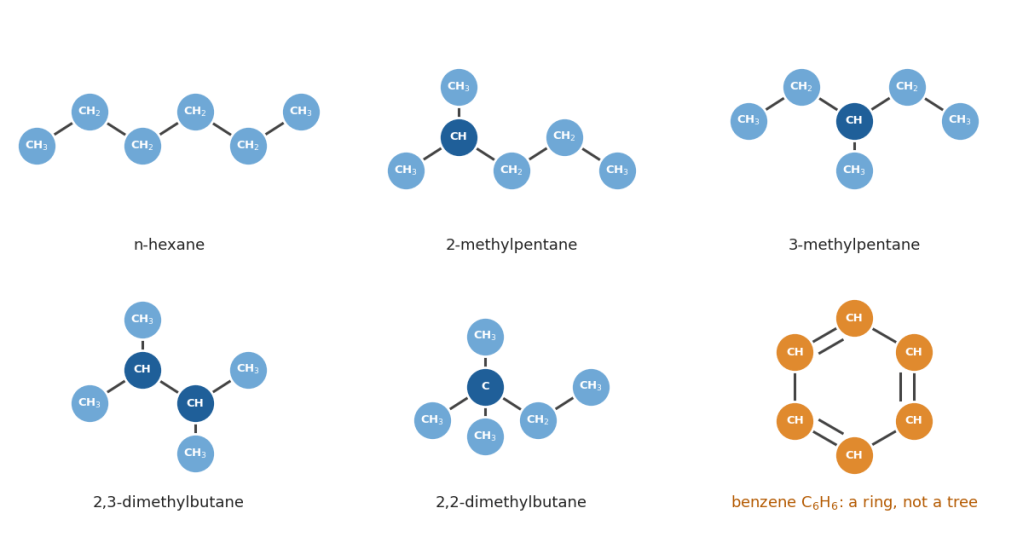
Michael T. M. Emmerich, University of Jyväskylä, Finland, September 2026 Chemistry has been an application field of mine for many years, including work on multi-objective optimisation and artificial intelligence in drug design [LMEW2023]. This is one reason why the present discussion about AI in mathematics and informatics feels familiar to me. Drug discovery has already…
-
Is Goldbach’s Conjecture ‘Likely’ True?
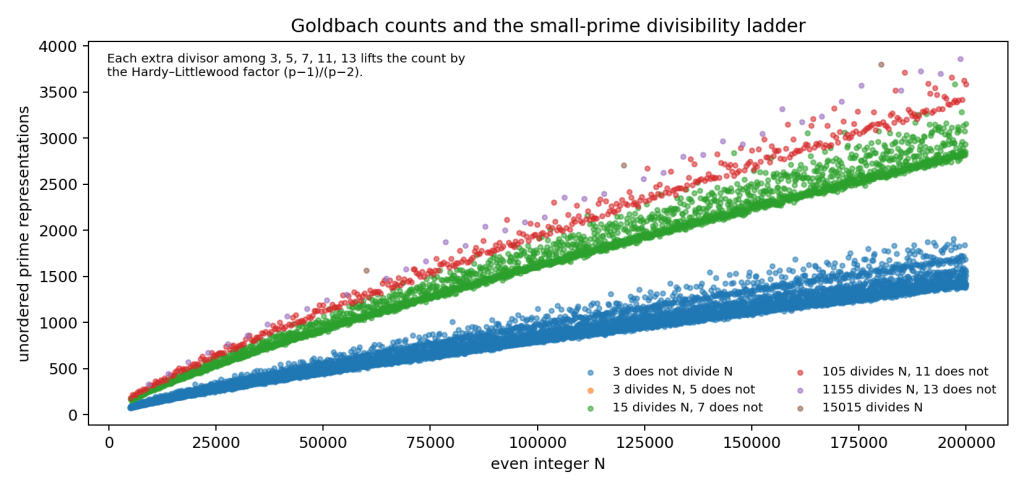
Michael Emmerich, Jyväskylä, 8.8.2026 Goldbach’s conjecture says that every even integer greater than 2 is a sum of two primes. It is either true or false; there is no literal probability attached to its truth value. So what could it mean to say that the conjecture is “likely” to be true? A useful interpretation is…
-
The Unit Distance Problem: Erdős’s Lattices, AI-Aided Breakthrough, and Community-Optimized Solutions
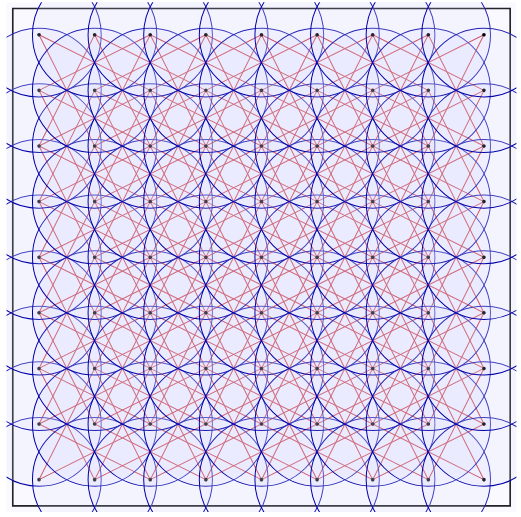
Date: June 2026 Author: Michael T. M. Emmerich This report is about the unit disc problem, a problem that was receiving recently renewed attention because AI tools [OpenAI2026] helped to disprove a long open conjecture on this problem. We will discuss the problem and the geometrical conjecture, and how the main idea of how it…
-
When Diversity Becomes Logic
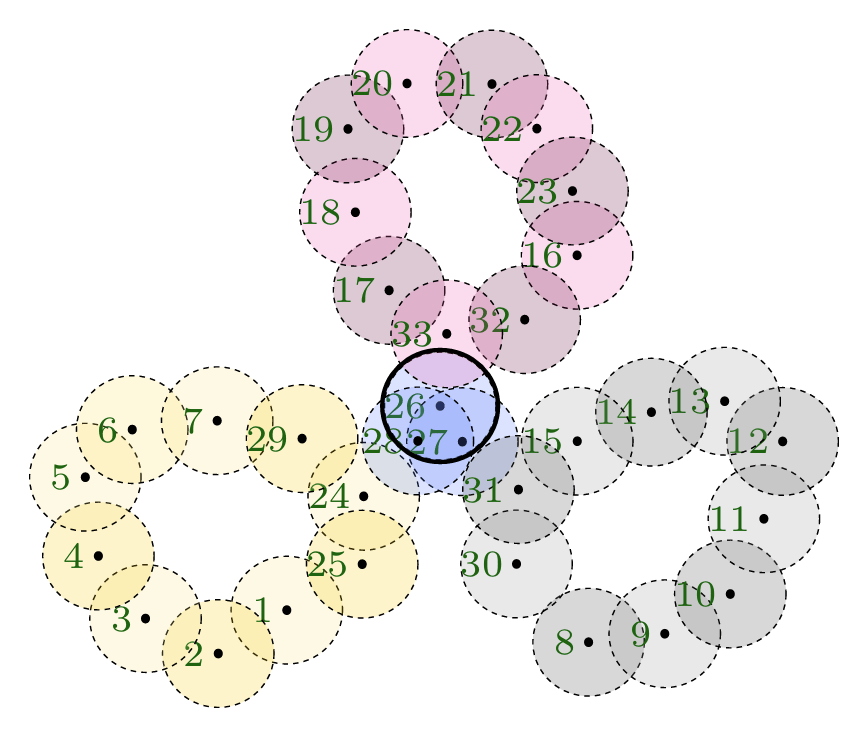
How selecting diverse subsets can encode logical circuits Michael Emmerich, May 12th 2026. Figure 1 shows how the satisfiability of the 3-SAT clause (‘1’ OR ‘2’ OR ‘3’) can be encoded as a maximum-diversity subset selection problem. Each disc centre represents a candidate choice, and the task is to select as many non-overlapping discs as…
-
Diversity Subset Selection on Lines and Staircases

My report, titled Exact Dynamic Programming for Solow–Polasky Diversity Subset Selection on Lines and Staircases, is now available on arXiv: https://arxiv.org/abs/2604.26929. In multiobjective optimization and decision analysis, we often face a deceptively simple task: from a larger set of candidate solutions, choose a smaller subset that is still representative, well-spread, and diverse. This sounds easy…
-
Between Uniformity and Collision: A New Phase-Transition
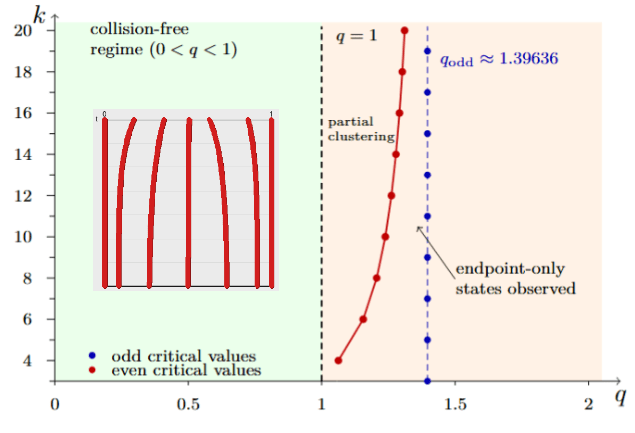
A New Phase Transition for Energy-Minimal Point Distributions on the Interval Date: 2026-03-28 Author: Michael T. M. Emmerich There are at least two very natural ways to spread points on the unit interval . One can try to maximize the sum of all pairwise distances, or one can try to maximize the smallest pairwise distance.…
-
A very, very simple method to estimate Pi
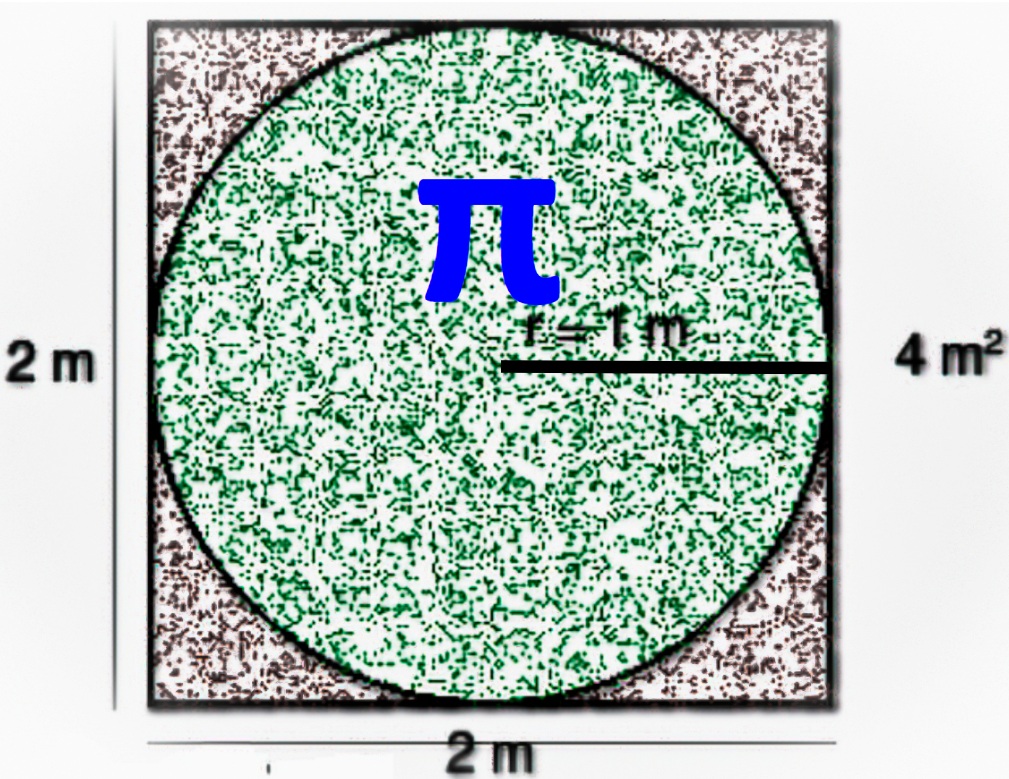
Date: 2026-03-15 Author: Michael T.M. Emmerich Every year, on March 14, mathematicians celebrate Pi Day. For my Mathematical Playground blog, I wished to post a short essay on a very, very simple Monte Carlo method for estimating . The nice aspect of this method is that it requires only a few lines of code, does…
-
Isolating Noise from Signal in the Prime Number Distribution

A Deep Dive into Riemann’s Hypothesis: Isolating Noise from Signal in the Prime Distribution Date: 2026-02-14 Author: Michael Emmerich The primes look orderly from far away and chaotic up close. At a large scale they follow clean laws: the density of primes near is about , and the prime-counting function is well approximated by .…
-
P-adic wheels
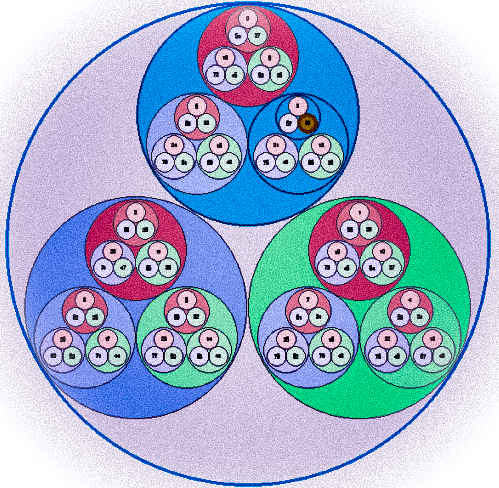
In the usual (real) number line, two numbers are “close” if their leading digits agree: is closer to than to . The p-adic world flips that intuition: closeness is governed by agreement of the low-order digits (divisibility by powers of a prime). This post introduces a small Pygame visualization (shown as circles inside circles inside…
-
How to Optimally Stack Your Books and Avoid a ‘Bad Hangover’
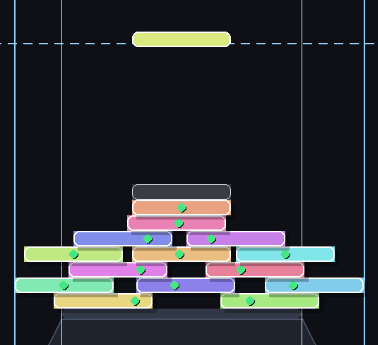
Michael T.M. Emmerich Date: 2025-12-29 Abstract It is Christmas time: books appear in cheerful piles as gifts, and in some households the morning after brings not only a “hangover” but also an ambitious attempt to stack them and exploit “overhang” beyond the edge of a table. How far can a stack of identical “books” (idealized…

