Category: Multicriteria Decision Analysis
-
What Combinatorial Chemistry can Teach us about the AI revolution in Mathematics and Informatics
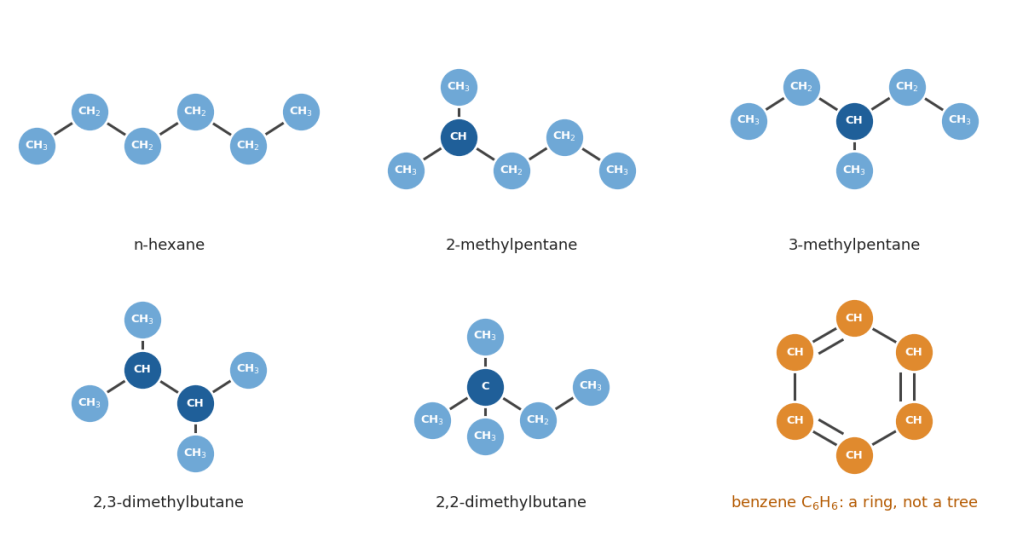
Michael T. M. Emmerich, University of Jyväskylä, Finland, September 2026 Chemistry has been an application field of mine for many years, including work on multi-objective optimisation and artificial intelligence in drug design [LMEW2023]. This is one reason why the present discussion about AI in mathematics and informatics feels familiar to me. Drug discovery has already…
-
Exact Hypervolume Subset Selection in 3-D: Implementing a Galactic Algorithm
Michael T. M. Emmerich, University of Jyväskylä, Finland, September 2026 In 2017 Karl Bringmann, Sergio Cabello and I showed that selecting the best out of points with respect to the hypervolume indicator is NP-hard already in three dimensions, that it can nevertheless be solved in time , and that it admits an efficient polynomial-time approximation…
-
Diversity Subset Selection on Lines and Staircases

My report, titled Exact Dynamic Programming for Solow–Polasky Diversity Subset Selection on Lines and Staircases, is now available on arXiv: https://arxiv.org/abs/2604.26929. In multiobjective optimization and decision analysis, we often face a deceptively simple task: from a larger set of candidate solutions, choose a smaller subset that is still representative, well-spread, and diverse. This sounds easy…
-
Interval Filters for Pre-Selection in Model-Assisted Constrained Pareto Optimization
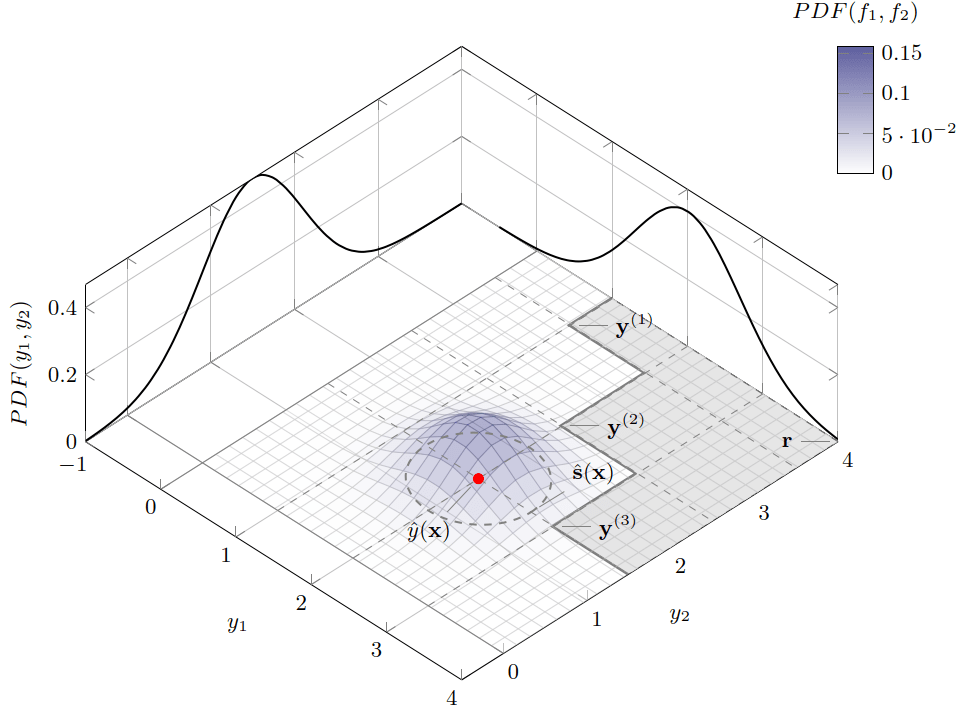
Michael Emmerich, JYU, Finland, 28.1.2026 When objective and constraint evaluations are expensive (CFD/FEM, digital-twin simulations, etc.), we often rely on Gaussian process regression (Kriging) as a surrogate. A GP does not only predict a mean vector, it also delivers uncertainty. Interpreted component-wise, this uncertainty naturally forms an axis-aligned confidence box in for objectives (and similarly…
-
Knee-Deep in the Mud and Climbing Out with a Clean Face
A History-Aware Multiobjective View of Escalation and De-escalation of Commitment We usually expect people to change course after negative feedback. Yet in investment and project settings the opposite is common: decision makers sometimes increase their commitment to a failing course of action. This pattern is known as escalation of commitment (Staw 1976; Staw 1981; Brockner…
-
A Tree-Free Path to Efficiently Compute the Hypervolume Indicator in Three Dimensions
In many algorithmic settings, the use of balanced trees, heaps, or other dynamic data structures is the standard way to achieve good asymptotic complexity. However, these structures can introduce memory fragmentation, unpredictable allocation patterns, garbage collection overhead, and branch-heavy execution — all undesirable in systems where performance must be deterministic and low-level behavior is important.…

