Tag: mathematics
-
A very, very simple method to estimate Pi
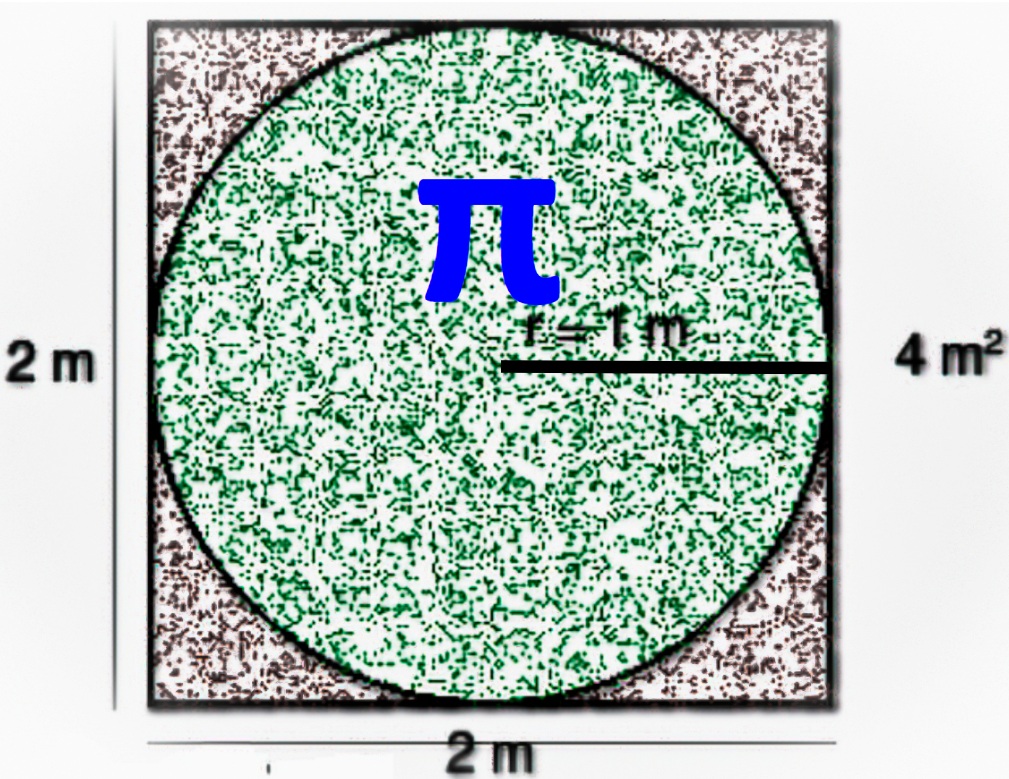
Date: 2026-03-15 Author: Michael T.M. Emmerich Every year, on March 14, mathematicians celebrate Pi Day. For my Mathematical Playground blog, I wished to post a short essay on a very, very simple Monte Carlo method for estimating . The nice aspect of this method is that it requires only a few lines of code, does…
-
P-adic wheels
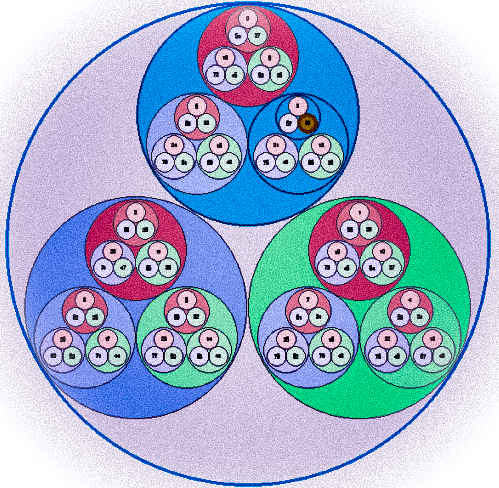
In the usual (real) number line, two numbers are “close” if their leading digits agree: is closer to than to . The p-adic world flips that intuition: closeness is governed by agreement of the low-order digits (divisibility by powers of a prime). This post introduces a small Pygame visualization (shown as circles inside circles inside…
-
The Hardness of Proving Hardness: Selecting Minimum Riesz Energy Subsets on a Line
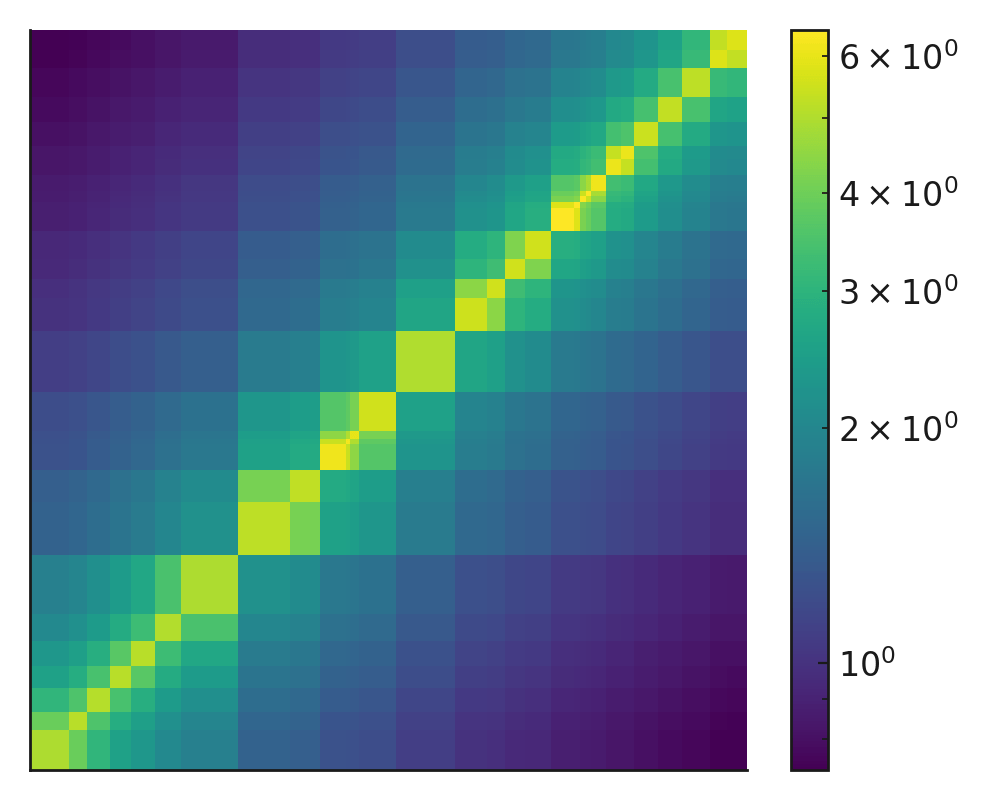
Figure: Logarithmically scaled Riesz interaction matrix for a random set of 30 points on the unit interval, with cell sizes proportional to the distances between points. Each rectangle corresponds to a pair of points: darker cells indicate stronger interactions (points that are closer on the line), while lighter cells indicate weaker interactions. Off-diagonal entries show…
-
Elegant Addition-only Prime Generation in LISP
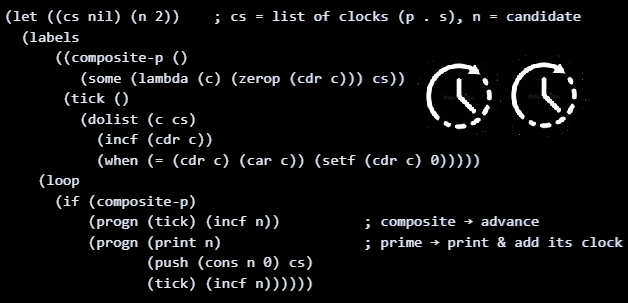
Brief history of LISP. LISP is a functional programming language that was created in the late 1950s by John McCarthy at MIT. It quickly became the lingua franca for symbolic AI because of its tiny, expressive core: homoiconic syntax (code-as-data), first-class functions/closures, macros that extend the language, and automatic memory management. McCarthy emphasized writing programs…
-
The Gumbel Distribution, Extreme Rainfall, and the Euler–Mascheroni Constant
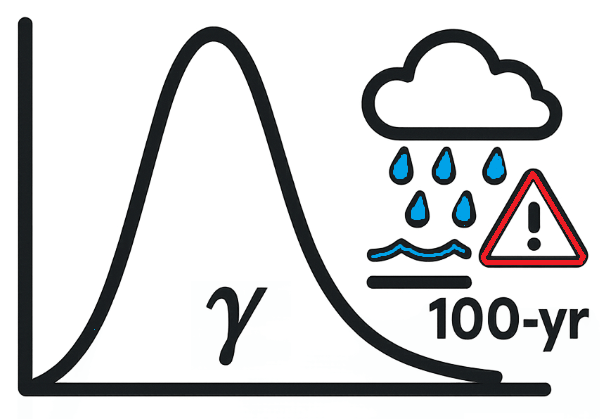
Nature doesn’t just have averages; it has extremes—the hottest day, the strongest wind, the largest daily rainfall, the highest flood. For extremes, a universal statistical law often appears: the Gumbel distribution. In this post, we meet it through a simple and realistic story about annual maximum rainfall, learn how a basic normalization makes its shape…
-
A Tree-Free Path to Efficiently Compute the Hypervolume Indicator in Three Dimensions
In many algorithmic settings, the use of balanced trees, heaps, or other dynamic data structures is the standard way to achieve good asymptotic complexity. However, these structures can introduce memory fragmentation, unpredictable allocation patterns, garbage collection overhead, and branch-heavy execution — all undesirable in systems where performance must be deterministic and low-level behavior is important.…
-
The Tent Map – A Simple Path to Chaos
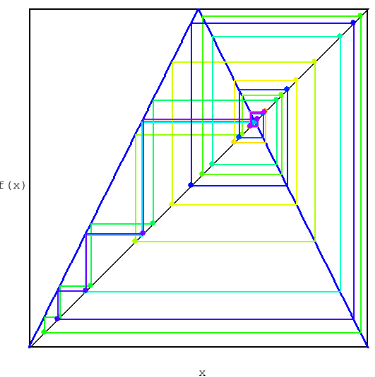
Michael Emmerich, August 20th 2025 Chaotic time series can emerge from very simple deterministic rules. The tent map is a classical example. It shows how fixed points can be unstable, how orbits diverge, and how randomness-like behavior arises from a piecewise linear rule. The Tent Map The tent map is defined on the interval by…
-
Centroid Subdivision of a Triangle: A Simple Recursion Creating a Complex Pattern
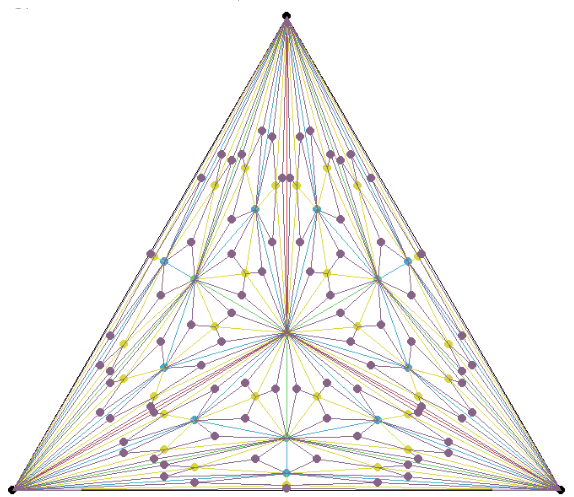
Michael Emmerich, 12 July 2025 1. Introduction A single, easily stated geometric rule—“draw the centroid of a triangle, connect it to the three vertices, and repeat recursively on the new sub-triangles”—produces a surprisingly intricate picture. This short exposition introduces the construction, shows how recursion drives the emergence of symmetry and complexity, and points out why…
-
Divisibility, Co-primes, and Euler’s Totient on the Prime Vector Grid

Michael Emmerich – 29 June 2025 1. Introduction Positive integers and their fundamental building blocks, the prime numbers, exhibit a rich combinatorial structure. This essay is part of a series that aims to derive some of the intriguing properties of integers using only elementary mathematical tools, thereby making them accessible to a broader audience. We do this…
 Michael Emmerich